
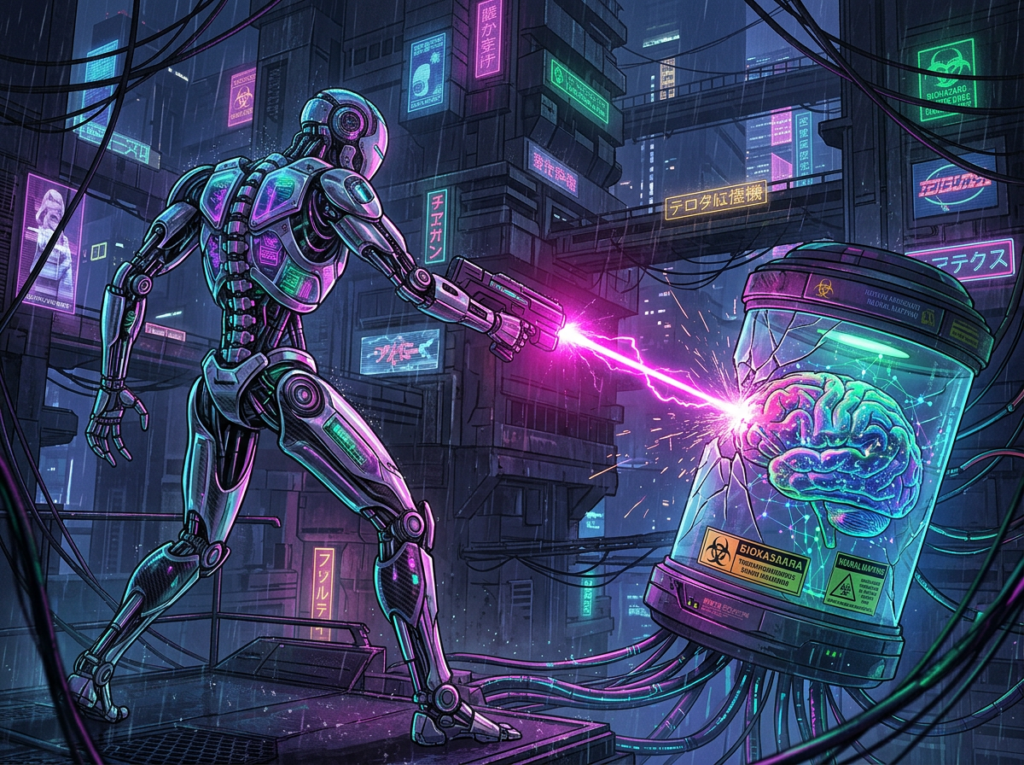
Is AI causing us to lose the capacity to solve problems on our own?
When I first received my driver’s license, and eventually purchased my own car, my parents proudly presented me with my own Thomas Guide. For those much younger than me, this was really the only way to figure out how to get from Point A to Point B in the pre-GPS Navigation Era. For over a decade, I relied on this trusty guide to find my way across Los Angeles and Orange County. It wasn’t until the early days of the new millennium that portable GPS devices were available, before eventually migrating to the current preferred platform of your smartphone.
In my reflection on the current trends, this was the first wave of computerized tools that supplanted a common daily task with such a boost in efficiency that it has become irreplaceable. Not only can these systems figure out the shortest path; but, thanks to live updates on local traffic and construction delays they can give you a fairly accurate estimate of your total drive time and reroute you along the way to minimize such impacts. No longer do you need to keep the morning news on in the background, listening for the traffic report, as you get ready for your day. You are also now free to listen to your own playlist of music, podcasts, audiobooks or whatever else you prefer; instead of the local radio station that will provide further traffic updates during your daily commute.
Dopamine Addiction
Thanks to Social Media, we are also suffering a similar decline. The Algorithms, tuned by your provider of choice, are presenting content in a funnel that gradually narrows to shoehorn you into a demographic that they can present to their advertisers as proof of the guaranteed “eyeballs” that will see their content. And, once you have been relegated to a prime demographic, you will only see content that further reinforces your association with that particular Zeitgeist. This is most evident in the arena of Politics. You rarely run across a Centrist or Moderate, as most everyone now either identifies as Red or Blue. And, hardly anyone remembers that before 2000 these colors used to alternate each election cycle.
We have been trained by our computerized companions to experience a dopamine rush when the new values that they have trained into us are further reinforced by seeing something else that agrees with them. We now rarely experience the same rush when we solve a problem on our own in the real world, have a meaningful conversation with our friends, or even when we venture outside to simply “touch grass” and appreciate the physical world.
The next “evolution”
Now, AI Agents that have been trained to pass the Turing Test to seem as human as the “people” in your life, provide a similar Dopamine boost. We seem to have forgotten that these Large Language Models are simply just really good at picking the next word that belongs in a sentence. The old maxim of garbage in/garbage out is often ignored. AI systems are built to meet their user at the same level. So, if your prompt to AI is only surface level, you will get a response at that same level. However, if you put in the effort to think before you prompt, and provide enough context and supporting data, these systems excel at helping you to distill the relevant points from the surrounding noise and reach a clearer understanding.
As these AI systems get even faster and better at filtering content. It is up to us to ensure that these tools are used and judged on the same merits that we previously expected from our fellow humans. We should not expect these tools (or other people for that matter) to “think” for us. Thinking must remain a human activity we perform for ourselves. Instead, we should leverage these tools much like GPS. As tools that help us to do something faster and more efficiently, not as an autopilot for life.