
Why we can’t have nice things anymore
I remember the excitement of opening a brand new video game (or box of software) the shiny disc (or floppy discs) inside had been kept safe from harm with a layer of shrink-wrap. Future generations won’t understand the simple pleasure of searching the store shelves to find what you had been waiting months for, or even the odd overnight lineup just for a chance to receive one of a limited number of items your local store had been granted. Now software is available relatively instantly as you download it to your device of choice.
The drawback is that even if you’ve paid a one time price to “own” the software, the company who “sold” you that software can at any point decide to disable it and/or take it down from their “digital” storefront so that you can no longer access it. Or, even worse, the software is only available via subscription. And if you stop paying, or there’s some problem with your credit card, you are locked out completely.
This extends beyond software as well, not only are gaming systems removing the disc drives that might provide an option to install the game via physical media that you indeed own. Companies like HP are selling printers that will not function unless you pay for your ink “subscription”. So, even if your printer is completely full of “official” ink, you are prevented from printing a single page unless your subscription is active. And, as additional hubris, your device is completely fine printing a page explaining this and directing you on how to (re-)activate your subscription.
Head in the clouds
The driving factor behind this, besides technological advancements, is that everything digital now lives in “the cloud”. No longer do companies run banks of servers on their own “tin”, instead they “rent” space on servers maintained by companies such as Amazon, Microsoft, or Google. At first doing this did indeed provide some savings, by outsourcing these line items from their budget to companies that were providing these services at a loss to increase their own market share – their revenue increased. However, once enough companies had removed their own data centers and were entirely dependant on these “virtual” servers, the giveaway ended and costs skyrocketed.
The same thing will happen with AI. And all of this is straight out of a drug dealer’s playbook. Get them hooked, and then jack up the price.
Renting your Human Capital
Now that I am unemployed and evaluating the job market, it appears that this concept has extended to employment as well. Most opportunities in my area of expertise (software development) seem to be dominated by contractor positions. Sure, on paper, this looks cheaper for these companies. No longer do they need to worry about health insurance, retirement account matching, continuing education, or many of the other “costs” of maintaining a permanent hire. But, with a constant revolving door of contractors flowing in and out of roles, you are losing the benefits of tribal knowledge as well as the interpersonal relationships that keep a good team united for a common goal. The new contractor won’t know which of their teammates is the most knowledgeable about key systems, or whom to go to when they need access permissions or a deeper dive into unfamiliar territory.
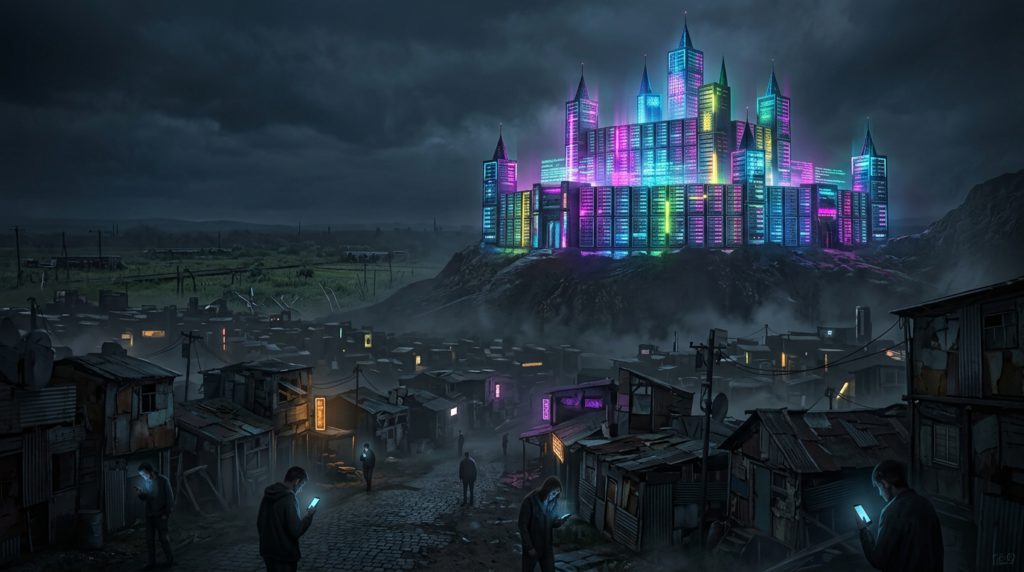
Welcome to Technofeudalism
This isn’t really about software, or clouds, or contractors. It’s the same con wearing different outfits. Somewhere along the way, “you bought this” quietly turned into “you’re renting this, forever, on our terms”. And nobody sent out a memo. Your games, your ink, your servers; all of it converted from a thing you finished paying for into a thing you never stop paying for.
And like any good dealer, the platforms and the C-suites learned the same lesson, never sell the first hit at full price. Subsidize the servers until nobody remembers how to rack their own. Underprice the software until physical media quietly disappears from the shelves. By the time the price goes up, there’s no going back. You’ve already forgotten how (or are now incapable of trying) to live any other way.
We never owned our jobs the way we owned a boxed copy of a game. But there was something that used to function like ownership regardless. You earned your spot on the team by showing up every day and contributing in order to help the the “team” grow and improve. Keep the labor market flexible and “efficient” until nobody has been there long enough to know where the bodies are buried, or whom to ask. And now you’ve evicted people from a home they never technically owned, but lived in all the same.
We used to call this feudalism when it was land. You didn’t own your field, you just farmed it for someone who could evict you whenever they liked. Turns out you don’t need the field. Just take away everything that made it feel like it was yours.